

Current Issue
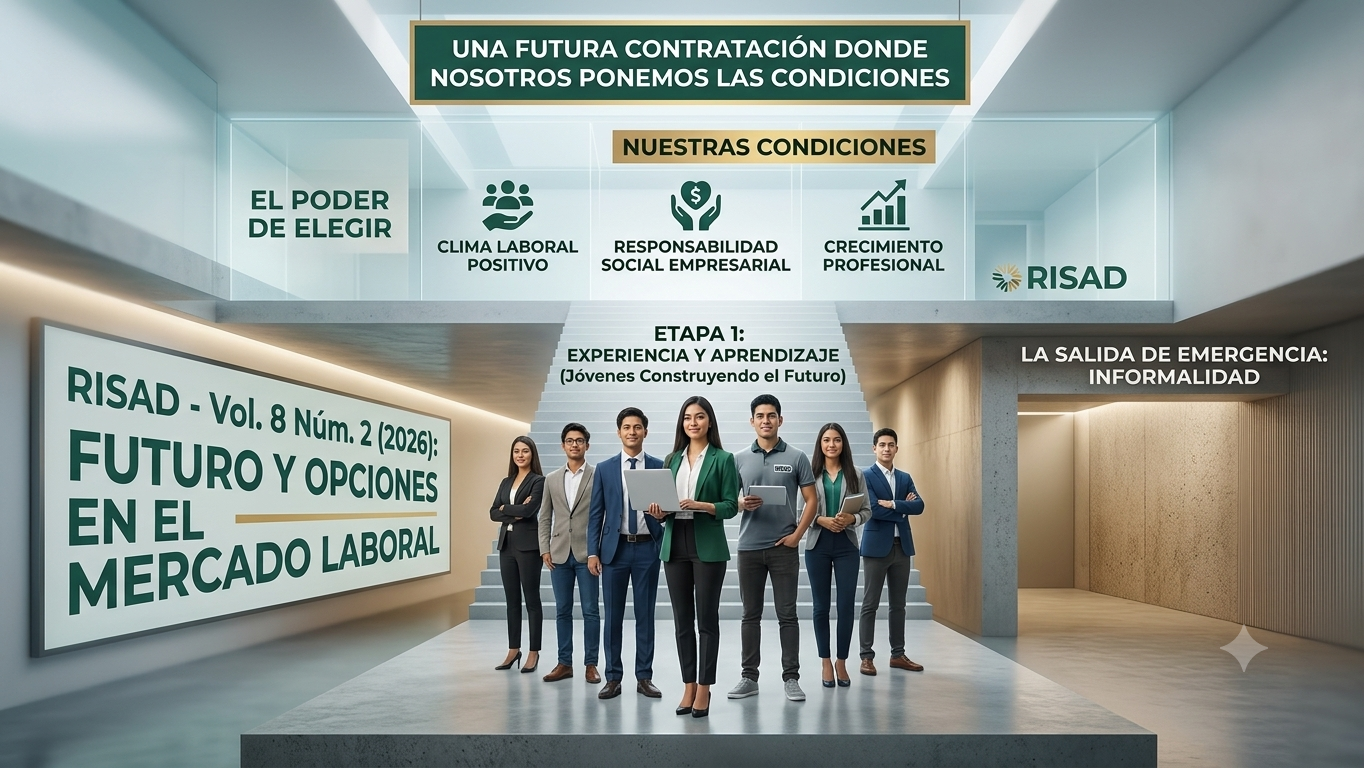
The social programs implemented by the government over the past six years have presented a challenge. In particular, the "Youth Building the Future" program poses a challenge for both young job seekers and employers, raising the question of whether it's better to keep them in the job or explore other options. That is, once young people gain experience in this initial work phase, they could have the tools to influence future employment conditions, even placing greater emphasis on factors beyond just salary. For example, factors like work environment and corporate social responsibility could influence future employees' choices about where to work. And if these conditions aren't met, there's an escape route for young job seekers: informality, a factor that, fortunately or unfortunately, has gained strength in recent years. These are the stories that RISAD shares with you, our readers, in the January-June 2026 issue. We hope you enjoy them.
Artículos
is to make a periodical analysis of wages levels in Mexico. This analysis is made by a comparison between the values of the purchasing power parity (PPP) of 34 countries retrieved from The World Bank database. The comparison has the objective of generate critical information for making decisions.
At the same time the IOLW tries to accomplish 4 of the Sustainable Development Goals from the ONU, that are:



was launched in spring of 2019 as a permanent multidisciplinary collaboration project made up of a team of researchers from Universidad La Salle Mexico. The project was born as a result of the concern to develop a research space that addresses salary conditions in the world with due diligence and academic rigor, both from a global and domestic perspective. The project is aimed at assessing real wages and determining what should be a living wage for each economy and for each work activity in a globalized world. The project carries out its work based on the context that, in the current globalized world, there are structures that prevent large portions of the population in the world from enjoying decent wages, due to systemic structures that have caused the participation of labor in the economy to be consistently reduced in the past fifty years.